
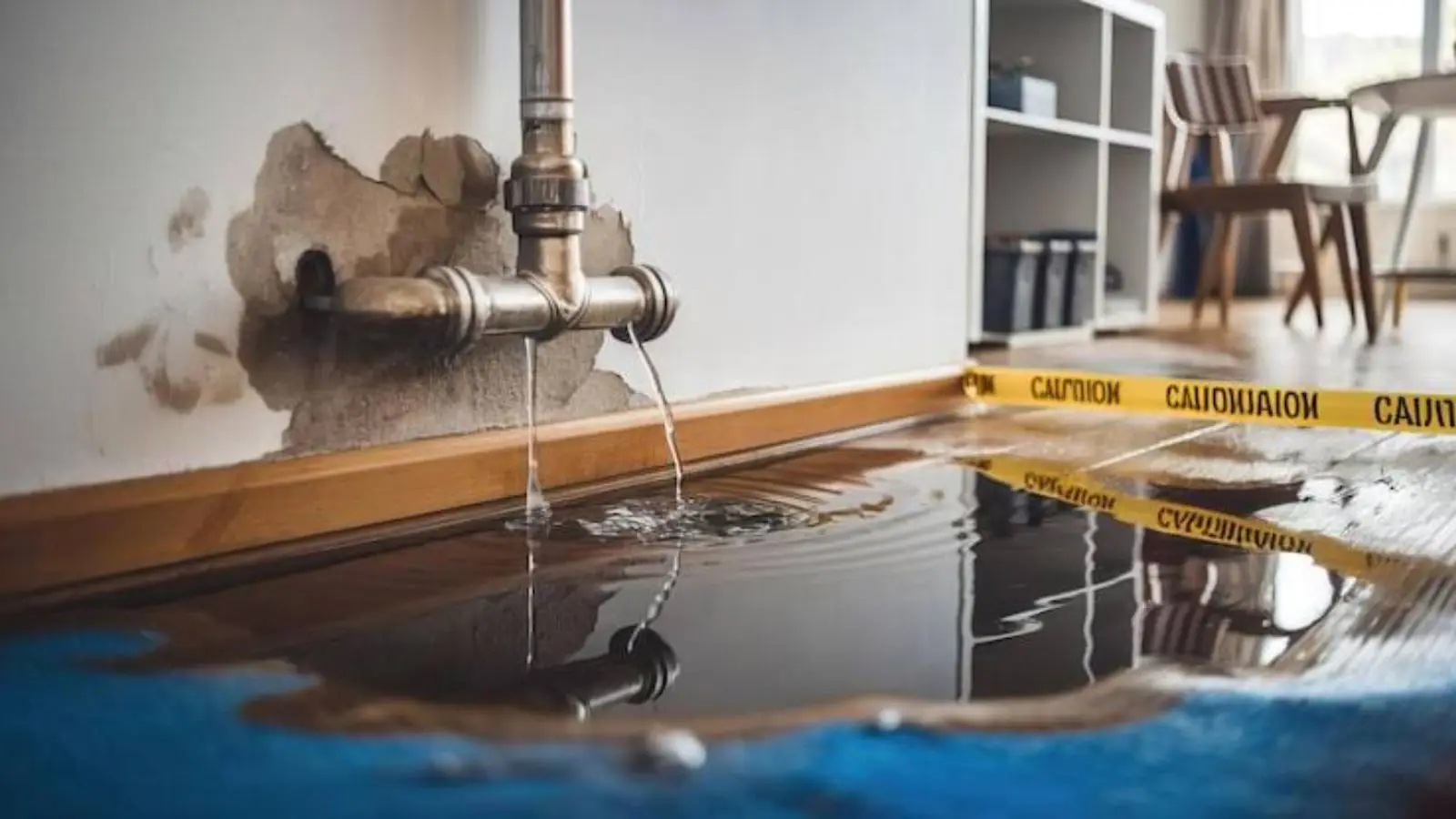
If a pipe has burst, stop the water first, then make the area safe, then start recording and drying. The sequence matters, because every minute of running water pushes more moisture into floors, walls and the rooms below.
This guide is written for the person standing in a wet kitchen or hallway right now. It covers shutting off the supply, handling power safely, photographing the damage, protecting belongings and what happens after the pipe is repaired. Our emergency line is open 24/7 if you need help at night or on a weekend.
Step one: shut off the water
Close the fixture shutoff if the break is under a sink or behind a toilet. If you cannot find it or the burst is inside a wall, go to the main water shutoff and turn it clockwise until it stops.
Once the supply is closed, let the leftover pressure bleed off by running the tap that sits lowest in the house. Know where your main valve is before an emergency, because many people discover it only when water is already on the floor.
If the main will not turn, leave it and call a plumber or the water utility for the street shutoff. Do not force a corroded valve with a wrench, because breaking it makes the situation worse.
Step two: power and safety
Water and electricity are a bad mix. Stay out of any room where water is touching outlets, appliances or the electrical panel.
If the breaker box is dry and easy to get to, you can switch off the circuits for wet areas. If water is near the panel, or you smell gas or see sparking, leave the building and call 911 or the utility before you call us. Never stand in standing water to reach a switch.
Water still moving through the house?
Call the 24/7 line. Same-day response is available when crews are available.
The first-hour checklist
Once the water is off and the space is safe, work through the list below in order. Each card is a separate task and none takes long.
Photograph first
Take wide and close photos of every wet surface and any visible pipe damage before moving things.
Lift valuables
Move electronics, paper and small furniture to dry ground and prop up sofa legs on blocks.
Keep people and pets out
Especially if the water has touched anything contaminated or soaked carpet.
Call a plumber
The pipe must be repaired before drying can finish.
Call restoration
Standing water and wet materials need extraction and drying equipment.
Notify your insurer
Report the loss and ask what they need. Keep receipts for protective steps.
Work calmly and take the photos before the cleanup, since the first images show the water line on walls and cabinets before anything dries.
Burst pipe under a sink or in a wall
A burst line under a kitchen sink sends water across the cabinet floor and into the subfloor. A line in a wall can run for hours before anyone notices, soaking insulation and drywall from the inside.
Following that unseen route takes a moisture meter plus a thermal camera that shows cool, wet patches behind finished surfaces. They find water in places the eye cannot, so the crew removes only what is actually wet.
Copper, PEX and older galvanized lines fail differently. A split in a supply line under a sink usually announces itself with a spray or a steady stream, while a pinhole in a wall pipe may weep for days and leave only a damp smell or a warm patch on drywall.
What extraction and drying look like
With the source stopped, the crew pulls standing water with extraction units, then removes soaked materials that cannot be dried, such as saturated padding or wet insulation. Afterward air movers and LGR dehumidifiers run until readings match a dry reference.
Our emergency water removal work covers the extraction side, and the drying that follows is described on the water mitigation page. You hear the scope and the pricing logic first, and only then does work begin.
Steps to avoid
Do not run a regular household vacuum on wet carpet, do not use heat guns on wet wood floors and do not paint or patch a wall until readings are normal. Hold off on anything permanent until the adjuster has had a look.
Also resist the urge to throw out damaged items. State insurance regulators tell homeowners to keep ruined items aside until the adjuster signs off.
Also avoid walking through wet areas in socks or bare feet if the water came from a drain line or has touched anything dirty. Treat that as potentially contaminated and ask for guidance before you handle it.
How the next 48 hours unfold
Mold usually needs more than a day or two of dampness to take hold, which is why federal guidance sets a one-to-two-day drying target. That window shapes the whole plan, which is why same-day action is worth more than an elegant repair later.
On day one the pipe is fixed and extraction is complete. By day two or three equipment has been working and readings are falling. Rebuild decisions come after the structure is dry.
Keep a simple log during those days. Note when equipment was placed, the readings you were given and any change in smell or visible staining, since that record helps both your insurer and any rebuild contractor understand how the loss progressed.
A local note for Manhattan Beach and nearby towns
A Public Works memo published by Manhattan Beach describes the city as its own retail water supplier, and it puts average use near 120 gallons per resident per day, so a pipe pouring unchecked is a big share of a household's normal day in minutes. A burst line in a house can release far more than daily use in a few minutes, so the main shutoff is the single most useful thing to locate in advance.
Across the border in Hawthorne, a Cal Water notice says the city itself now runs water service and billing as of September 2026, so a question about the street-side line goes to city staff. Hermosa Beach's own Building Division page warns that groundwater sits high there and can flood basements, which makes a burst pipe in any below-grade room worth treating with extra care. See the Hermosa Beach page.
Questions about burst pipe water damage in manhattan beach: what to do first
What should I do first when a pipe bursts in Manhattan Beach?
Close the small valve at the fixture, or the main shutoff if there is none, and then make the room safe. After that, photograph the damage, lift valuables and call a plumber and a restoration crew.
Is it safe to shut off the electricity?
Treat power as a last, careful step, taken solely if the panel stays dry and the walk to it is clear. If water is near the panel or you notice gas or sparking, leave and call 911 or the utility first.
Do I need a plumber before restoration?
You need the pipe repaired so water stops, but extraction and drying can start in parallel once the supply is off. Tell us when you call so we can plan around the repair.
Will insurance pay for a burst pipe?
Many homeowners policies cover sudden and accidental water damage, but coverage depends on the policy. Read your policy, call your insurer with questions, and hold on to every receipt for emergency steps.
Does a burst pipe in Hawthorne or Hermosa Beach change anything?
The steps are the same. The difference is who handles the public side, and the nearest permit office if repairs open walls or framing. Permit questions go to the building office in your city.