
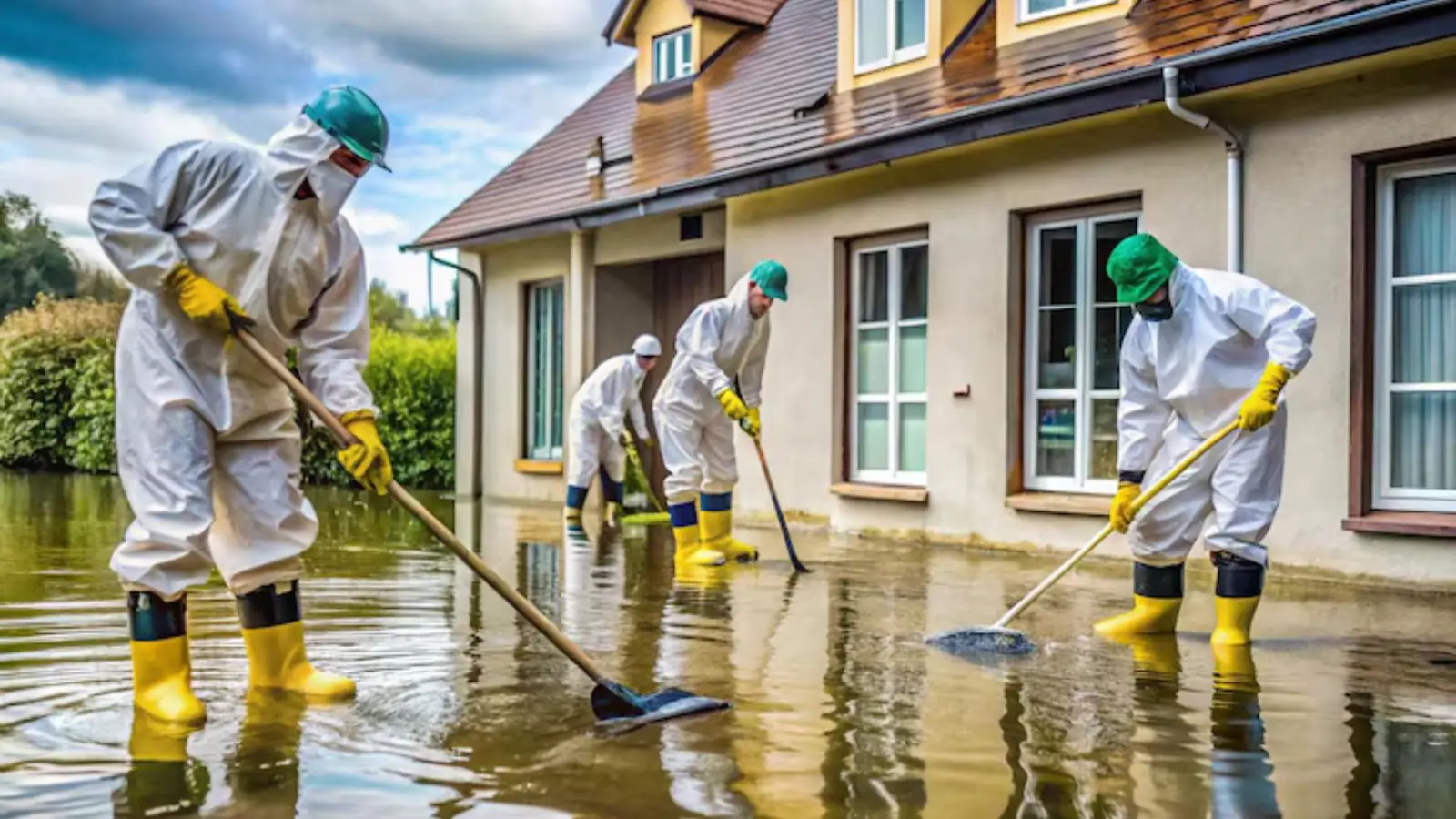
Water damage cleanup in Manhattan Beach, CA is what happens after the source is shut off: wet debris and ruined materials are removed, surfaces are sanitized and the space is deodorized so drying and rebuilding can start on clean ground. The first 48 hours matter most, so call our 24/7 line as soon as you can, even late at night.
Before anyone gets there, make sure the main valve stays shut and keep clear of water from a toilet, a drain or the street. Get boxes and valuables up off wet floors. The breaker for a soaked room is worth flipping only if you can reach a dry panel. A gas smell or sparks mean you step outside and phone 911 or the utility first.
The first 48 hours after the water stops
Standing water gets most of the attention, but it is the damp material left behind that causes trouble. Carpet pad holds water like a sponge, insulation packs down and stays wet, and drywall wicks moisture upward from the floor. The longer these sit, the more likely they are to become a total loss.
Cleanup is therefore a race against absorption. Federal guidance sets the drying goal at about a day or two to head off mold, and cleanup is what opens the room up so drying gear can actually reach the wet surfaces. Wet debris left sitting only holds everything back.
When contaminated water is an emergency
Not all water is the same. The industry's published S500 standard sorts it into three categories, and the category decides how much has to be removed and how it is handled. The table below is a decision framework, not a diagnosis, since a crew still checks the actual source.
Sewage and rising outdoor water are the urgent cases. Do not wade through them, do not run fans to dry them yourself, and do not use household vacuums on them. Call the line, then keep everyone clear.
| Water category | Typical sources | What cleanup involves |
|---|---|---|
| Category 1, clean | Broken supply line, sink overflow, a leaking water heater | Extraction, removal of saturated pad and low drywall if needed, then drying |
| Category 2, gray | Washing machine or dishwasher discharge, some toilet overflows without solids | Removal of porous materials, cleaning with antimicrobial products, drying |
| Category 3, black | Sewage backup, river or storm floodwater, long-standing water | Removal of porous materials, full sanitizing, protective equipment, strict containment |
Clean water that sits for a couple of days can change categories, so even a supply-line leak becomes a bigger job when it goes untreated. For storm or ground-level flooding, the work moves under flood damage restoration, where Category 3 handling is the rule.
Water stopped but everything is soaked?
Describe what got wet and for how long. Cleanup starts with knowing the water category.
What can be saved and what has to go
Cleanup always involves a sorting decision, and crews tend to be conservative with porous materials. The point is to keep what can be dried and cleaned safely and to remove what cannot, so that the rebuild is not covering a hidden problem.
Carpet and pad
Pad is usually removed after any water event. Carpet from a clean source can sometimes be lifted, dried and reinstalled.
Drywall and insulation
Wet insulation is commonly removed. Drywall is cut a short height above the waterline when it has wicked or stayed saturated.
Baseboards and trim
Painted wood trim can often be removed carefully, dried and put back. Swollen composite trim is replaced.
Hardwood and laminate
Solid wood may be dried with mats and monitored for cupping. Laminate that has swelled at the seams rarely recovers.
Furniture and contents
Hard goods can be cleaned and dried. Upholstery and soft items from contaminated water are usually discarded.
Even so, nothing should head for the curb yet. Photograph damaged belongings, set them somewhere dry and let them sit until the adjuster has signed off on them.
Debris removal, sanitizing and deodorizing
Once the sorting is done, debris is bagged and removed so it is not sitting in the house. Floors and framing that stay in place are cleaned and treated with antimicrobial products matched to the water category, and wall cavities are cleaned before they are closed.
Odor is dealt with at the source rather than masked. Wet organic material, carpet pad and soaked insulation cause most of the smell, so removing them does more than any spray. Where odor lingers in the air, HEPA air scrubbers and thorough surface cleaning follow, and a lingering smell after cleanup is a reason to check for moisture still trapped in a cavity.
Assess and protect
A walk-through identifies the water category, the affected rooms and any safety hazards before work begins.
Extract and clear debris
Standing water is removed and unsalvageable materials are cut out, bagged and carried out.
Clean and sanitize
Surfaces and framing that stay are cleaned, and antimicrobial treatment is applied where the category calls for it.
Deodorize
Odor sources are removed first, then air scrubbing and surface cleaning address what remains.
Hand off to drying
The space is ready for water mitigation equipment, which finishes the moisture removal the cleanup began.
Documenting the loss for your insurance claim
A well-kept record helps a claim, and cleanup does not need to pause for it. Shoot wide and close-up photos before moving anything, and write down what was damaged, including brands and models if you know them. State insurance regulators also recommend a running log of every call and letter.
Save receipts for sensible protective spending and limit yourself to temporary fixes until the adjuster has looked things over. The crew can note what comes out and the reason, which adds to your file. What an insurer pays is decided by your policy, so we make no promises on that.
Cleanup, mitigation and repair are different jobs
People often use the three words interchangeably, but they are separate phases. Mitigation stops the loss and dries the structure, cleanup removes the debris and contamination, and repair rebuilds. Cleanup sits in the middle, and it often runs alongside the first days of mitigation.
After the structure is dry, the rebuild of walls, flooring and paint belongs on the water damage repair page. Leaving any phase out is how households end up repainting over a wet wall.
What shapes a cleanup estimate
Pricing starts with a walk-through where the crew sorts what is wet and lays out the scope and the way the figure is built. Since the work follows what the water touched and carried, one room might take half a day or several. The table shows what drives that gap.
| What varies | Effect on cleanup |
|---|---|
| Water category | Gray and black water bring extra removal, sanitizing and protective gear |
| Affected area | A larger footprint multiplies debris, hauling and labor |
| Materials involved | Pad and insulation usually go, while hard surfaces tend to clean up |
| Drying days and equipment | The cleanup scope sets when drying can begin and how many days it lasts |
| Rebuild scope | Whatever is removed decides what gets replaced afterward, as its own phase |
Policies commonly respond to a pipe that bursts without warning but not to a leak that went ignored, and anything driven in from outside, like a storm surge, belongs to flood insurance. Ask your carrier what applies, and if the water came in from outdoors, the FEMA map for your address is the place to check flood zone status.
To price your own cleanup, ring (424) 550-5662.
Cleanup calls from the Strand to Lawndale
In Manhattan Beach, give the crew your cross streets and any access detail, such as the gate at Manhattan Village, so debris trucks and equipment are not delayed. Big cleanouts sometimes touch permit rules, and the city's permits desk on Highland Avenue at (310) 802-5544 can tell you before demolition goes further.
Cleanup also reaches inland. Over in Lawndale, loud demolition is limited by the city's posted construction window of weekday daytime hours, shorter Saturdays and no Sundays. The Lawndale service page explains how that fits with emergency work.
Common questions, answered for Manhattan Beach
Do you handle water damage cleanup emergencies at night or on weekends in Manhattan Beach?
Absolutely. Someone answers at all hours, on holidays and weekend nights too, and a same-day visit is often possible when a crew is available to go out. A late call gets the same attention as a noon one, and you will get instructions while the visit is lined up.
Arrival times are not promised because traffic and access change.
How soon should cleanup start after a leak?
Right after the source is stopped. Clearing debris and wet materials is what lets drying meet the roughly two-day mold-prevention goal from federal guidance, and each extra day of waiting puts more material beyond saving.
Is it safe to clean up water from a washing machine or toilet myself?
Gray water and anything from a toilet may carry contamination, and household cleaning rarely reaches into carpet pad or wall cavities. Keep children and pets out and call before you start. If it is clean water from a small supply line leak, a crew can still tell you what you can handle safely.
What gets thrown away and what gets cleaned?
Porous materials that were wet from contaminated water, such as carpet pad, insulation and some drywall, are usually removed. Hard surfaces and many wood items can be cleaned and dried. Hold off on discarding damaged items until the adjuster has seen them, a step the state insurance department also lists in its claim guidance.
Will the smell go away after cleanup?
Usually, once the wet material causing it is removed. Odor comes from damp pad, insulation and framing, so removal and drying matter more than sprays. If a smell lingers after cleanup, a hidden wet area is a possibility and a moisture reading should be taken.
Is cleanup covered by my homeowners insurance?
Your policy and the cause of the water decide. Abrupt failures are the usual covered case, slow leaks often are not, and flooding needs separate coverage. Ask the insurer and keep your protective-cost receipts.