
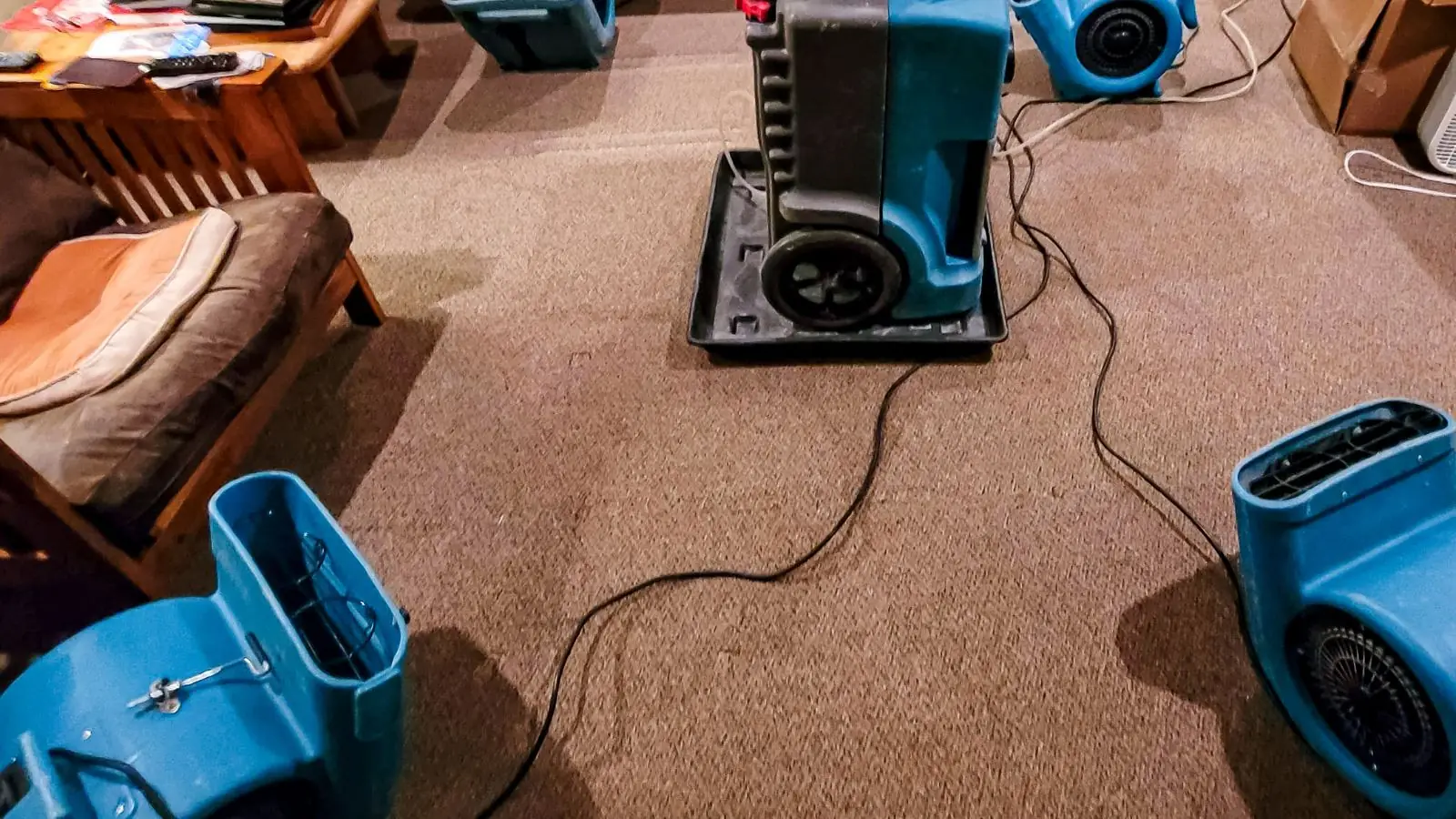
Water damage in a Manhattan Beach, CA home usually takes several days to dry with professional equipment, and the true answer is set by moisture readings rather than the calendar. A small wet patch of carpet can come back to normal in a short span, while a soaked wall cavity or a hardwood floor takes longer.
This guide covers what drives drying time, what each piece of equipment does, how a crew proves a structure is dry, and which situations stretch the schedule. Early hours count most, which is why water mitigation begins the moment the leak is shut off.
What decides how long drying takes
No two losses dry at the same pace. Five factors do most of the work in setting the schedule.
The material
Dense materials such as hardwood, plaster and concrete release moisture slowly. Light materials such as carpet and thin drywall let go faster.
The water category
Clean supply-line water, gray water and sewage are handled differently. Contaminated water often means removal of porous materials instead of drying them in place.
The size of the loss
More wet square footage and more affected rooms mean more equipment and more days to bring the whole structure down to normal.
Airflow and humidity
Drying needs moving air and dry air. Indoor humidity that stays high slows every material in the room.
Hidden moisture
Water that travels into wall cavities, under cabinets or beneath flooring keeps a structure wet long after the surface looks fine.
The 24-48 hour window
Federal guidance sets the target at one to two days for getting wet areas and belongings dry, because mold growth becomes likely after that. That short window explains why dispatch asks you to close the valve and call fast, and why emergency water removal comes first.
Standing water goes first, using pumps and extraction units. Once the bulk water is out, the job shifts from removing liquid to removing moisture held inside materials, which is the slower part. Anyone with active water can read how this begins on the emergency water removal page.
Water still moving through the house?
Call the 24/7 line. Same-day response is available when crews are available.
Equipment and what each piece does
A drying setup is a system, not one machine. Each tool has a job, and placement is planned room by room.
| Equipment | What it does |
|---|---|
| Extraction unit and pumps | Remove standing water and pull water out of carpet and pad |
| Air movers | Push air across wet surfaces so moisture leaves the material |
| LGR dehumidifiers | Pull the moisture out of the air so the room keeps drying |
| Desiccant dehumidifiers | Dry air at lower temperatures or in tight spaces where refrigerant units struggle |
| Moisture meters | Read moisture inside wood, drywall and concrete |
| Thermal imaging camera | Shows cool, wet areas behind surfaces so nothing is missed |
We do not offer equipment rental. Drying works when the equipment is sized, placed and checked by people who read the meters every day.
Why daily visits matter
A drying job is a series of small corrections. On day one the crew places air movers by the wettest zones and sets dehumidifier output for the size of the room. By day two the readings usually show which areas are responding and which are lagging.
Lagging spots get attention. An air mover may be moved to a corner, a baseboard pulled to vent a wall cavity, or a dehumidifier added. Without those visits, equipment can run for days while a stubborn pocket stays wet, and that pocket is where mold gets its start.
You can help by keeping doors between wet and dry rooms closed, leaving equipment plugged in and untouched, and asking to see the log. A clear log with falling numbers is the best proof that the work is going well.
How a crew knows the structure is dry
Dry is a number, not a feeling. A crew sets a drying goal using readings from unaffected parts of the same home, then drives wet materials down to that goal.
Map the moisture
Meters and a thermal camera mark wet areas on day one, including spots no one saw.
Set the drying goal
Readings from dry reference materials in the same house become the target.
Read every day
The same points are measured daily. Falling numbers mean the setup is working, and flat numbers mean equipment needs to move.
Adjust the setup
Air movers are repositioned, wall cavities are opened or vented, and dehumidifier output is checked.
Remove equipment when readings reach the goal
Equipment leaves only when materials match the target, which is why the end date is not fixed in advance.
Drying time by material
These comparisons are general. Real timing comes from daily readings in your own home.
| Material | How it behaves | Typical pace |
|---|---|---|
| Carpet and pad | Pad holds water and often is removed | Usually measured in days, not hours |
| Drywall | Absorbs quickly and may need cutting if saturated | Usually measured in days when dried in place |
| Hardwood flooring | Cups as moisture moves through boards | Slow and watched closely, often the longest item |
| Concrete slab | Releases moisture steadily | Slowest, can continue after other materials are done |
| Framing lumber | Holds moisture inside wall cavities | Days, checked with meters |
When drying takes longer than expected
Three situations stretch the schedule. Water that sat for more than a couple of days is deeper in the materials. Layers of flooring, such as tile over a slab or hardwood over a subfloor, trap moisture. And closed wall cavities hold water that no one can see.
If you are weighing options after a slow leak or an overnight overflow, ask the crew to show you the readings. Homeowners in nearby Hawthorne and Hermosa Beach ask the same question, and the answer is always the daily log.
If the schedule slips, ask what changed. A good answer names a material, a reading or a hidden source, never a vague reason.
Manhattan Beach drying notes
Indoor humidity should stay under 60 percent according to the EPA, and 30 to 50 percent is the range it calls ideal. A coastal home that is not drying should be checked against that range during the job, and a crew that logs indoor humidity daily gives you a real number to read.
Rain at LAX averages 12.23 inches over a July to June season in the 1991 to 2020 normals, so wet weather is part of the local picture. Dry weather helps, but it does not replace equipment. A wall cavity does not dry because the sky is clear.
If you live in the Sand Section, west of Highland Avenue and close to The Strand, ask the crew to record indoor humidity on each visit. That gives you a practical way to tell whether the equipment, and not the neighborhood air, is doing the work.
Questions about how long does water damage take to dry in manhattan beach?
Can I just open the windows and use fans?
Fans and open windows help a surface feel dry, but they rarely reach moisture inside walls and subfloors. A moisture meter is the only reliable way to know.
Why does equipment stay for several days?
Because the goal is a reading, not a time. Equipment stays until the materials match the drying goal set from dry reference readings in your home.
Will the noise and heat from equipment be constant?
Air movers and dehumidifiers run through the drying period, so expect steady noise and warmer rooms. A crew can discuss placement so the system works with your daily routine.
How soon after a pipe break should I call?
Immediately, since the EPA's 24-48 hour window is the target for getting wet areas dry. The sooner extraction starts, the less moisture soaks into materials.
Does Manhattan Beach weather make drying slower?
Indoor humidity is what counts. When indoor humidity stays high, drying drags, which is why dehumidifiers belong in every setup.